
EU Bans Privacy Coins for Regulated Crypto Firms, Spares Bitcoin Transfers
The European Union has prohibited regulated crypto firms from handling privacy coins while keeping self-hosted Bitcoin wallet transfers free from identity verification requirements.
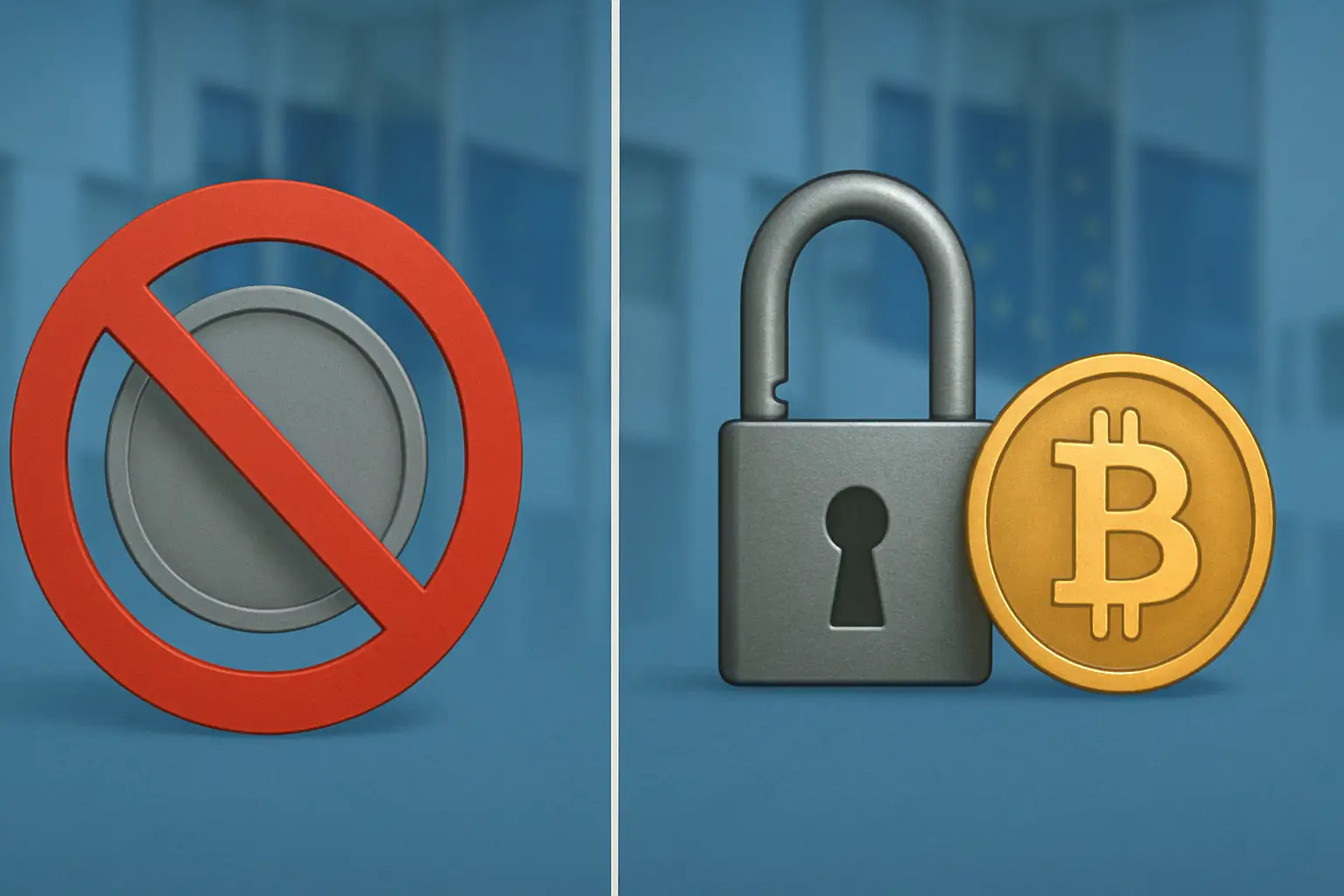
EU Draws a Hard Line on Privacy Coins
The European Union has moved to ban regulated cryptocurrency firms from offering or handling privacy coins, a category of digital assets designed to obscure transaction details and user identities. The rule targets crypto asset service providers operating under EU oversight, meaning exchanges and brokers licensed in the bloc will no longer be permitted to list or facilitate trades in coins like Monero or Zcash.
The prohibition reflects growing pressure from EU regulators to bring crypto markets in line with anti-money-laundering standards already applied to traditional financial institutions. Privacy coins have long been a sticking point for regulators because their built-in anonymity features make transaction tracing difficult, complicating compliance with know-your-customer and anti-money-laundering obligations.
For firms already holding regulatory licenses across EU member states, the practical impact is significant. Any platform that currently lists privacy-focused tokens will need to delist them or risk breaching the new requirements. Smaller or decentralized platforms operating outside the licensed perimeter are not directly captured by the rule, though broader EU crypto regulations are tightening across the board.
Bitcoin Wallet Transfers Get a Pass on ID Rules
Despite the tough stance on privacy coins, the EU stopped short of extending identity verification requirements to all crypto transfers. Notably, transfers involving self-hosted or unhosted Bitcoin wallets have been kept outside the mandatory identification framework, at least for now.
This carve-out matters for ordinary users who hold Bitcoin in personal wallets rather than on centralized exchanges. Under the exemption, moving funds between a personal wallet and a regulated platform does not automatically trigger the same ID checks that apply to traditional bank transfers above certain thresholds.
The distinction between privacy coins and self-hosted wallet transfers reflects the EU's attempt to balance financial surveillance goals against the practical realities of how Bitcoin and other major cryptocurrencies are actually used. Bitcoin transactions are recorded on a public blockchain, making them traceable in a way that purpose-built privacy coins are not, which appears to have influenced where regulators chose to draw the line.
What This Means for the Crypto Industry
The two-pronged approach, banning privacy coins while exempting self-hosted wallet transfers, signals that EU regulators are not treating all crypto assets the same way. Bitcoin, as the largest and most transparent public blockchain, continues to receive relatively accommodating treatment compared to assets whose primary design feature is hiding transaction data.
For crypto firms operating in the EU, compliance teams will need to review token listings immediately and confirm which assets fall under the privacy coin classification. The rules raise practical questions about borderline cases, since some mainstream tokens include optional privacy features rather than making anonymity a core function.
The broader regulatory backdrop is the EU's Markets in Crypto-Assets regulation, known as MiCA, which has been rolling out requirements for crypto asset service providers across member states. The privacy coin ban and wallet transfer exemption fit within that framework, extending the bloc's effort to bring crypto into the same compliance architecture as conventional finance without imposing blanket restrictions that could alienate mainstream crypto users.
Reporting on the specific regulatory text was attributed to Pluang.

Crypto & Markets Analyst
Jordan breaks down crypto markets and digital assets for everyday readers.